

When you need to move water from one location to another, the power equipment you need is a water pump. The type of pump you choose will determine what you can use it for. You may be able to remove water and debris from a flooded basement, pump water into your home from your well, or even pump muddy water and trash out of certain areas. Selecting the right pump will determine exactly what the equipment can do for you, and there are many elements to consider.
Home Use
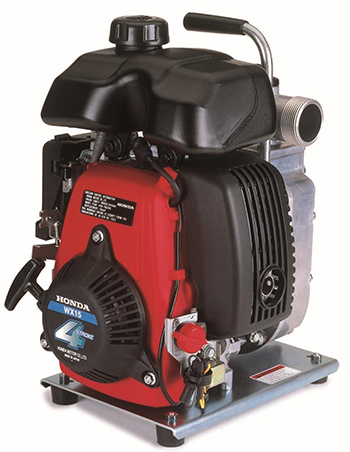
De-watering pumps remove certain types of water, including clear, slimy, mucky, and silty water. Three general types of pumps are used for de-watering: lightweight, general-purpose, and high-pressure. Regarding residential use, light and general-purpose pumps are often used. They are used by recreational users, boat owners, gardeners, and homeowners for specific tasks, like:
- Watering lawns
- Watering gardens
- Pool draining
- Flood control
Professional Use
In the professional setting, water pump uses vary depending on specific needs. For instance, a farmer may need to transfer water from a stream or pond to the trough where his livestock comes to drink. On a construction site, rainwater may become trapped in an area that needs to be excavated. The water pump may be used to ensure operations can continue as planned and in safe work conditions. General-purpose or high-pressure pumps are often used in industrial and commercial settings, providing the correct pressure and flow to quickly handle a more significant amount of water.
De-watering general-purpose and high-pressure pumps are not the only Honda pumps designed for professional use, however. While these pumps are efficient at carrying water from one location to another, there are specific pumps that must be used for other materials.
| Type of Pump | Description | Points to Consider | Applications |
|---|---|---|---|
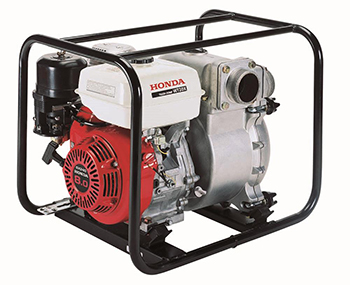
| Trash Pump | Designed to handle high-volume water and solids up to 1-1/16 inches in diameter | •Quick clean-out port makes servicing the pump simple and fast •Able to handle up to 433 gallons per minute (GPM) | Rental applications and contractors |
| Chemical Pump | Used for pumping water, but able to pump agricultural and industrial chemicals as well | To avoid damage, only approved chemicals may be used with this pump | Industrial and agricultural applications |
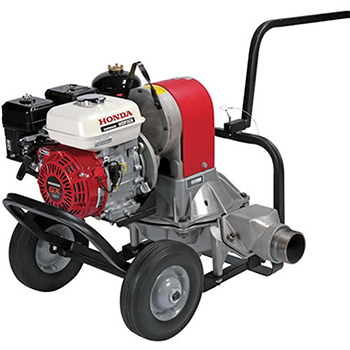
| Diaphragm Pump | Positive displacement and slow seepage pump designed to pump trash, mud and waste | Capable of handling high solid content, including refinery waste, industrial fluids, sticks and even stones | Used by many commercial businesses, including restaurants, campgrounds, construction and mining corporations |
Other Types of Water Pumps
Regarding pump models, many homeowners and professionals are familiar with submersible pumps. These pumps are unique because they can be installed or temporarily placed below the water level. They feature a sealed motor that protects the interior from being affected by moisture and dust that could alter its operation. These pumps function in both residential and commercial settings and are typically used for a variety of tasks, including:
- Emptying swimming pools
- Removing water from washing machines
- Pumping dirty water
- Draining window wells
- Draining basements
- Providing water to decorative fountains
Electric vs. Gas: Choosing a Water Pump
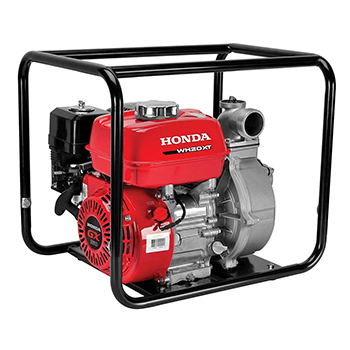
When learning to select a pump, determining whether or not you want to purchase an electric or gas version is an important decision. Both have their advantages, but each is suited for specific uses.
Electric water pumps are often used indoors, where outlets are readily available. Most operate on 120V and can be plugged into any standard outlet. However, some may be 230V pumps, which will require additional electrical support. Electric pumps are typically less potent than gas pump models. However, they don’t require as much maintenance and don’t require oil changes. Because of their need for electricity, you will have to use Honda portable generators with them if you want to use them in a location where no outlet is available.
Gas water pumps aren’t limited by cords and outlets. They are the perfect solution for jobs that take you outdoors, far away from electrical outlets. They also tend to offer a higher GPM than their electrical counterparts. However, these pumps cannot be used inside because of carbon monoxide emissions.
Features to Look for
When evaluating water pump specifications, there are many features to look for that will help you decide what pump is the right one for you.
If you leave your pump in the same place most of the time, its weight might be fine when selecting it. If, however, you need to move the pump to different locations often, a lightweight design is essential. Could you consider the overall weight and construction of the water pump?
When transferring water from one location to another, having the ability to hook the pump up directly to a garden hose is essential. This can be especially useful when using the pump to water your lawn, garden, or field. If this is the case, please ensure the pump you choose comes with a garden hose adapter, clamps, a strainer, and a suction hose.
Understanding the GPM discharge capacity is critical when learning to select a pump. GPM refers to how quickly the water, waste, or chemicals flow from the source to where they are discharged.
Some pump models are equipped with silicon carbide mechanic seals. These seals are resistant to abrasions, promoting extended use and wear.
On a water pump, the volute is the casing that creates pressure from the energy produced by the impeller. As the impeller pushes the water, chemicals, or solids into the volute, it creates enough pressure behind the water to make it toward the discharge point. Many pump models are equipped with a cast iron volute. This material helps to reduce the amount of wear experienced by the casing and improves the longevity of the water pump.
Additional Features
Many pumps come with a Honda overhead valve (OHV) engine. Unlike older engines, which feature valves in the block, these engines have valves in the cylinder head. This increases their overall power and makes startup easy.
Gas-powered water pumps require oil to function correctly. In some engines, checking the oil often is needed, as a low oil level could damage the engine if it goes unnoticed. When it comes to Honda outdoor power equipment, this is fine. Most engines are equipment with Oil Alert. This technology involves a sensor capable of detecting when oil levels are too low for proper water pump function. When the sensor detects a low oil level, it automatically shuts down the engine to prevent engine seizures.
On some pump models, high-performance mounts reduce the amount of vibration the pump experiences. This offers many benefits, including reducing wear and tear on the pump parts. It also reduces the chances of the Honda power equipment burying itself in the dirt or “walking” away from its set location.
Water pumps designed for chemical use require a different construction than those created for moving clear or dirty water. These pumps have features like seals made from EPDM, a rubber compatible with numerous chemicals.
Submersible pumps can be used for temporary flooding situations, but they may also be needed for continuously moving water from one location to another. For this reason, many submersible pumps are designed for constant use. These pumps can operate every day without overheating as long as they are kept in the right environment.
Necessary Water Pump Accessories
Your water pump may come with all the parts you need to begin using right away, or you might have to purchase a few additional accessories to enjoy all of your water pump’s uses. Here are a few accessories you might need.
- Couplers and adaptors connect your pump to a hose. These are generally included in Honda hose kits.
- There are two types of hose kits available: pin lug and camlock. Pin lug hoses work like a traditional garden hose, threading onto your water pump with the help of a spanner wrench. Camlock hoses easily attach to your pump with a “quick connect” system.
- Pipe nipples are included in the hose kits and are used to connect the hose and the strainer together.
- It’s a good idea to invest in a few extra gaskets. These parts are often lost and are required for the hose kit to work properly.
Maintaining Your Water Pump
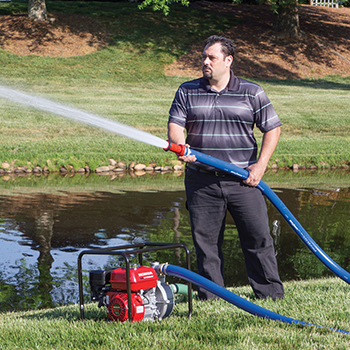
After you select the right water pump, keeping it up and running requires some maintenance. For your safety, always turn off the power to the water pump before you begin working on it. You should also consult the manual that comes with the pump before you try to clean it or repair it yourself.
In general, maintenance of the pump is simple. Before operating it, could you make sure to remove any visible debris from it? If you’re using a submersible pump, the mechanical float should also have plenty of room around it to float effortlessly. Pumps with backup power will require a new battery every two to three years. The pump should also be flushed out once a year, but any clogs or stoppages should be dealt with between these flushes as necessary. If you need help with removing clogs or flushing the power equipment, make sure to consult a professional to avoid doing any damage to the system.
Selecting a new water pump requires attention to detail. Before making a purchase, consider the types of pumps available and consider how you will use the pump. Then, consider the various features available for each pump to determine which will suit your needs.

